

Medical neurology excels at addressing conditions that have a clear structural basis. When tissue is damaged or altered, medical neurology identifies it and applies tools to stabilize, manage, or remove the problem.
What is Chiropractic Neurology?
Chiropractic neurology, also known as functional neurology, takes a different approach. It recognizes that many neurological symptoms are not the result of structural damage, but rather functional lesions.
A functional lesion is a problem in how neurons and networks are working, even though no structural damage appears on an MRI or CT scan. In other words, the tissue looks normal, but the brain is not regulating or processing information as it should.
Examples of functional neurological challenges include:
- Dysautonomia and poor regulation of heart rate or blood pressure
- Post-concussion syndrome without visible brain damage
- Sensory processing difficulties
- Migraines without structural abnormalities
- Movement disorders without structural lesions
Chiropractic neurologists evaluate the brain in terms of function rather than structure. They want to know which circuits are underactive, overactive, or poorly coordinated. Rather than relying solely on imaging, they use in-depth physical and neurological examinations to observe how the nervous system responds to different inputs.
This might include:
- Eye movement testing to assess brainstem and cerebellar function
- Balance and postural control assessments
- Reflex and coordination testing
- Sensory integration evaluations
- Autonomic testing such as blood pressure and heart rate variability during postural changes
By examining these responses, chiropractic neurologists can determine which parts of the brain and nervous system are not communicating effectively. Care strategies are then designed to restore more efficient function. These may involve specific sensory exercises, visual or vestibular stimulation, proprioceptive training, or myofascial techniques such as MyoSynaptics to improve input to the brain.
Structural Lesions Versus Functional Lesions: Why the Distinction Matters
To understand the difference between medical and chiropractic neurology, it is essential to grasp the distinction between structural and functional lesions.
- Structural lesions are physical changes in the nervous system that can be visualized or measured. They are like a road that has been broken apart by an earthquake—clear damage that prevents traffic from flowing.
- Functional lesions are disruptions in how neurons communicate, even though the tissue itself looks normal. They are like a traffic light stuck on red: the road is intact, but the flow of information is halted or irregular.
Medical neurology primarily deals with the first category. Chiropractic neurology specializes in the second.
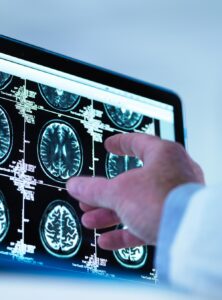 Why does this matter? Because many people with neurological symptoms undergo MRI or CT scans that come back “normal.” They leave with few answers, even though they continue to struggle with daily challenges. For these individuals, functional lesions may be the underlying issue. Chiropractic neurology provides a framework to evaluate and rehabilitate those functional problems.
Testing in Medical Neurology
Medical neurologists have access to some of the most advanced diagnostic imaging and testing technologies in healthcare. Common assessments include:
- MRI scans: detailed images of the brain and spinal cord to detect tumors, strokes, and demyelinating diseases.
- CT scans: rapid imaging to detect bleeding, trauma, or large lesions.
- EEG: measures electrical activity to diagnose seizures or brainwave abnormalities.
- Nerve conduction studies and electromyography (EMG): assess the health of nerves and muscles.
- Lumbar punctures: analyze cerebrospinal fluid for infection, inflammation, or autoimmune disease.
These tools are unmatched in their ability to detect structural changes. If tissue is altered or damaged, medical testing will reveal it.
Testing in Chiropractic Neurology
Chiropractic neurology emphasizes functional assessments that measure how the brain and nervous system are performing in real time. While structural imaging may be reviewed, the focus is on evaluating dynamic responses. Examples include:
- Oculomotor testing: tracking smooth pursuit, saccades, and gaze stability to evaluate cortical, brainstem, and cerebellar function.
- Balance platform testing: measuring stability and coordination to detect cerebellar or vestibular dysfunction.
- Reflex testing: evaluating asymmetries or delays in neurological responses.
- Cognitive and sensory integration assessments: determining how well the brain processes and integrates information.
- Autonomic function testing: monitoring changes in heart rate, respiration, and blood pressure during postural or sensory challenges.
These examinations provide insight into how the brain is working, even when structural tests are normal. The goal is not just to find dysfunction, but to map out strategies to strengthen and restore function.
How the Two Approaches Work Together
It is not a matter of one branch of neurology being superior to the other. Instead, medical and chiropractic neurology serve complementary roles.
- When there is suspicion of a tumor, bleeding, or progressive structural disease, medical neurology is essential.
- When symptoms persist despite normal imaging, chiropractic neurology may provide answers and strategies for recovery.
- In some cases, patients benefit from both: medical management of structural lesions and functional rehabilitation to optimize nervous system performance.
This collaborative understanding ensures that individuals receive the most comprehensive care possible.
What This Means for Daily Life
Neurological problems, whether structural or functional, affect more than just the brain. They impact how you move, how you feel, how you think, and how you interact with the world. When you struggle with dizziness, headaches, fatigue, or movement challenges, it disrupts your relationships, your work, and your independence.
Knowing the distinction between medical and chiropractic neurology can help you find the right pathway. If your scans have revealed structural damage, medical neurology provides treatment options. If your tests have been “normal” but you still feel unwell, chiropractic neurology may offer the missing piece by addressing functional lesions.
A Clear Path Forward
At its core, neurology is about connection. Neurons connect to form circuits. Circuits connect to form networks. Networks connect to form your lived experience. When those connections are damaged structurally or disrupted functionally, symptoms arise.
Medical neurology identifies and treats damage to the structure. Chiropractic neurology evaluates and rehabilitates the function. Together, they provide a more complete view of brain health.
If you are seeking answers, the next step is not to choose one approach over the other, but to recognize that both exist, both matter, and both may be necessary in your healing journey.
If you or someone you love is experiencing symptoms that you are not finding any explanation for or relief from and you would like to learn how chiropractic neurology can help, contact the team at Georgia Chiropractic Neurology Center today. We look forward to hearing from you.
Written by Sophie Hose, DC, MS, DACNB, CCSP
Peer-Reviewed References
- Hauser, S. L., & Josephson, S. A. (2022). Harrison’s Neurology in Clinical Medicine. McGraw-Hill Education.
- Carrick, F. R. (2017). Neurophysiological implications of functional neurological lesion. Frontiers in Human Neuroscience, 11, 95.
- Kandel, E. R., Koester, J. D., Mack, S. H., & Siegelbaum, S. A. (2021). Principles of Neural Science (6th ed.). McGraw-Hill Education.
- Giza, C. C., & Hovda, D. A. (2014). The new neurometabolic cascade of concussion. Neurosurgery, 75(S4), S24–S33.
- Leisman, G., Moustafa, A. A., & Shafir, T. (2016). Thinking, walking, talking: Integratory motor and cognitive brain function. Frontiers in Public Health, 4, 94.