
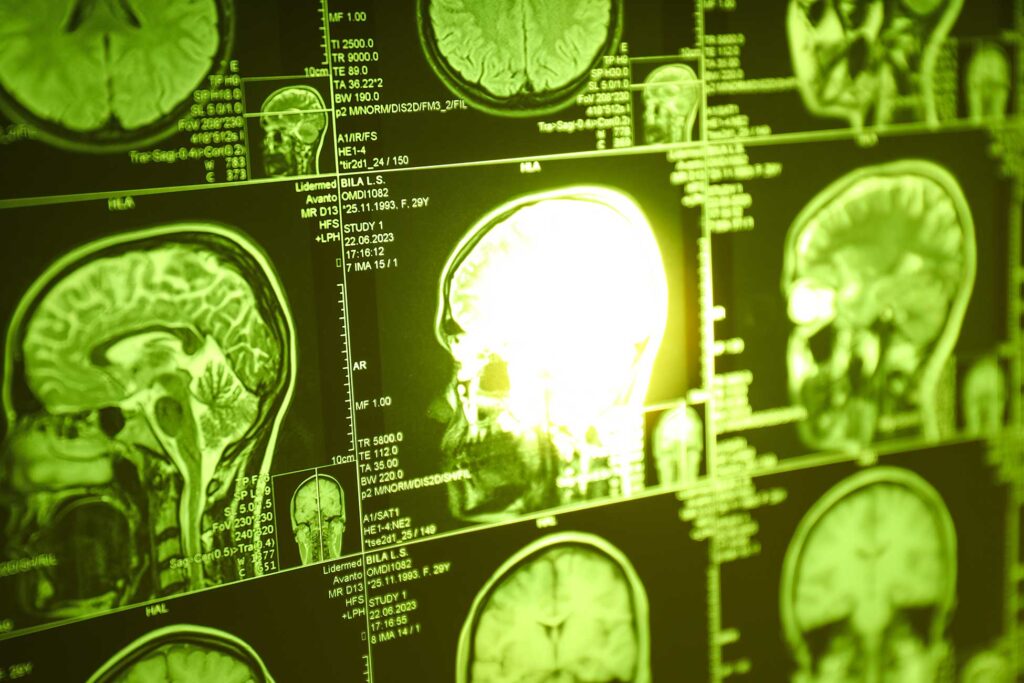
When most people think about concussions, they picture a dramatic hit on a football field, a fall during a soccer game, or an athlete being removed from competition.
What many people do not realize is that some of the most important concussion decisions are made long before an injury ever occurs.
In fact, one of the most valuable tools in modern concussion management is often completed when an athlete is completely healthy.
That tool is baseline testing.
Among the technologies increasingly used for concussion assessment is the C3 Logix system, a platform originally developed through collaboration with the Cleveland Clinic that combines cognitive testing, balance assessment, symptom tracking, and neurological performance measures into a single digital evaluation.
While C3 Logix is best known for concussion management, its usefulness extends far beyond sports injuries. The assessment can provide valuable information about cognitive function, balance, reaction time, and neurological performance in a variety of clinical situations.
For chiropractic neurologists, tools like C3 Logix offer an opportunity to objectively measure how the brain and nervous system are functioning, both before and after injury.
More importantly, they help answer a critical question:
How do we know whether someone’s brain function has changed if we never measured it when they were healthy?
The Athlete, Student, or Individual Who Wants Accurate Answers
 Imagine two athletes sustain nearly identical concussions.
Both report headaches.
Both experience difficulty concentrating.
Both feel mentally slower than normal.
Yet their recovery paths may look very different.
One athlete returns to baseline quickly.
The other demonstrates subtle cognitive deficits that persist long after symptoms begin to improve.
Without objective testing, these differences can be difficult to identify.
The challenge becomes even greater because concussion symptoms are often subjective.
Symptoms may include:
- Headaches
- Dizziness
- Brain fog
- Memory difficulties
- Light sensitivity
- Fatigue
- Difficulty concentrating
- Balance problems
- Visual disturbances
Two people with similar symptoms may demonstrate very different levels of neurological impairment.
Likewise, some individuals report feeling completely normal while objective testing reveals lingering deficits.
This is where comprehensive assessment tools become valuable.
- Learn more about: The Impact of Concussions on the Limbic System: Understanding Neurological and Emotional Consequences
Symptoms Alone Do Not Tell the Whole Story
Historically, concussion management relied heavily on symptom reporting.
An athlete felt better.
They returned to play.
Unfortunately, neuroscience has shown that symptom resolution does not always equal neurological recovery.
A person may feel normal while cognitive processing speed remains impaired.
Balance deficits may persist even after headaches disappear.
Reaction times may remain slower than normal.
Visual processing may still be compromised.
This creates risk.
Returning to sports, school, work, or daily activities before neurological recovery is complete may increase the likelihood of prolonged symptoms or additional injury.
The challenge is finding objective ways to measure brain function.
This is where assessments such as C3 Logix can help.
What Is the C3 Logix Assessment?
C3 Logix is a computerized neurological assessment platform developed with input from researchers and clinicians associated with the Cleveland Clinic.
The system was originally designed to assist with concussion evaluation and management by providing objective measures of neurological performance.
Rather than relying solely on symptoms, C3 Logix evaluates multiple aspects of brain function, including:
- Processing speed
- Reaction time
- Cognitive performance
- Memory
- Balance
- Postural stability
- Symptom severity
- Neurological recovery trends
One of the system’s most valuable features is its ability to compare post-injury performance to an individual’s own baseline.
This allows clinicians to measure change rather than relying on population averages.
Because every brain is different, this distinction is incredibly important.
Why Baseline Testing Matters
Perhaps the greatest strength of C3 Logix is not what happens after a concussion.
It is what happens before one.
Baseline testing establishes a snapshot of an individual’s normal neurological function while they are healthy.
This includes measurements of:
- Memory performance
- Cognitive processing
- Reaction time
- Balance
- Symptom scores
If an injury later occurs, clinicians can compare new results directly against the individual’s pre-injury performance.
This provides a much clearer picture of neurological change.
Without baseline testing, clinicians are often forced to compare patients against normative data.
While population averages can be helpful, they do not account for individual differences.
For example:
An athlete with naturally fast reaction times may still score within “normal” ranges after a concussion while performing significantly below their personal baseline.
Conversely, another athlete may naturally perform below average on cognitive testing despite being completely healthy.
Baseline assessments help eliminate this uncertainty.
Instead of asking, “Is this score normal?”
Clinicians can ask, “Is this score normal for this individual?”
That distinction can dramatically improve diagnostic accuracy and recovery decisions.
A Chiropractic Neurology Perspective
Chiropractic neurology focuses on functional assessment of the nervous system.
Rather than examining only structural injury, chiropractic neurologists evaluate how well different neurological systems are performing.
The brain controls:
- Cognition
- Balance
- Eye movements
- Attention
- Memory
- Coordination
- Reaction time
- Sensory integration
Many of these functions can be affected by concussion and other neurological conditions.
Tools such as C3 Logix provide objective data that can complement a comprehensive neurological examination.
For example, a chiropractic neurologist may combine C3 Logix findings with:
- Eye movement testing
- Vestibular assessments
- Balance evaluations
- Coordination testing
- Cognitive assessments
- Visual processing evaluations
- Autonomic nervous system testing
Together, these assessments help create a more complete understanding of neurological function.
Rather than relying on guesswork, clinicians can monitor measurable changes over time.
Beyond Concussions: Using C3 Logix as a General Cognitive Assessment Tool
Although concussion management remains its most common application, the information gathered through C3 Logix can be useful in many other situations.
The same neurological systems affected by concussion may also be impacted by other conditions.
For example:
Persistent Post-Concussion Syndrome
Patients with ongoing symptoms months after injury may demonstrate subtle deficits in balance, cognition, or reaction time that can be tracked objectively.
Vestibular Disorders
Individuals with dizziness, imbalance, or visual motion sensitivity may benefit from objective balance and stability measurements.
Cognitive Complaints and Brain Fog
Patients frequently describe:
- Difficulty concentrating
- Mental fatigue
- Reduced processing speed
- Memory challenges
Objective testing may help identify measurable deficits and monitor progress during rehabilitation.
Migraine Disorders
Many migraine sufferers experience cognitive symptoms between attacks.
Assessments of processing speed, attention, and reaction time can provide valuable clinical information.
Neurological Rehabilitation
Patients recovering from various neurological conditions often require ongoing monitoring of cognitive and motor performance.
Repeated testing allows clinicians to track improvement and adjust rehabilitation strategies accordingly.
Athletic Performance Monitoring
Even in the absence of injury, some clinicians utilize neurological testing to monitor cognitive and sensorimotor performance over time.
Because athletic performance depends heavily on reaction time, visual processing, and balance, these measurements may provide useful insights into overall neurological readiness.
Objective Measurement Leads to Better Decisions
One of the biggest challenges in neurological care is determining whether improvement is truly occurring.
Patients may feel better but still demonstrate deficits.
Others may report persistent symptoms despite objective improvements.
Having measurable data helps bridge this gap.
When used appropriately, C3 Logix can help clinicians:
- Establish baseline function
- Detect post-injury changes
- Monitor recovery trends
- Identify lingering deficits
- Guide rehabilitation decisions
- Support return-to-play decisions
- Track objective progress over time
Importantly, no single test should ever determine diagnosis or treatment.
C3 Logix is a tool, not a diagnosis.
Its greatest value comes when integrated into a comprehensive neurological evaluation.
Why Objective Data Matters
Concussions are often referred to as “invisible injuries.”
Unlike a broken bone, they cannot always be seen on imaging.
This can create frustration for patients, families, coaches, and healthcare providers.
Objective assessments help make the invisible more visible.
They provide measurable information about how the brain is functioning.
They reduce reliance on guesswork.
They improve communication among healthcare providers.
Most importantly, they help ensure that recovery decisions are based on more than symptoms alone.
Building Better Brain Care Before Injury Happens
Many people think about concussion care only after an injury occurs.
The reality is that some of the most important decisions happen beforehand.
Baseline testing provides a valuable reference point that can improve diagnosis, guide treatment, and support safer return-to-play decisions.
For athletes, this information can be invaluable.
For parents, it provides peace of mind.
For clinicians, it offers objective data that helps inform care.
And for chiropractic neurologists, tools such as C3 Logix fit naturally within a model that emphasizes functional assessment of the nervous system.
The goal is not simply identifying injury.
The goal is understanding how the brain functions, how it changes after injury, and how recovery can be measured objectively.
Because when it comes to brain health, having a map before the journey begins often makes all the difference when unexpected challenges arise.
If you or someone you love is suffering from a concussion and you would like to learn how chiropractic neurology can help, contact the team at Georgia Chiropractic Neurology Center today. We look forward to hearing from you.
Written by Sophie Hose, DC, MS, DACNB, CCSP
Peer-Reviewed References
- John Ridley Stroop. Studies of interference in serial verbal reactions. Journal of Experimental Psychology. 1935;18(6):643-662.
- Donald T. Stuss, Levine B, Alexander MP, et al. Wisconsin Card Sorting Test and Stroop Test performance in focal frontal and posterior brain-damaged patients. Brain. 2001;124(2):263-280.
- Steven G. MacLeod. Half a century of research on the Stroop effect: an integrative review. Psychological Bulletin. 1991;109(2):163-203.
- C. Munro Cullum, et al. Neuropsychological assessment of sports-related concussion. Journal of Athletic Training. 2001;36(3):247-255.
- Michael I. Posner, Rothbart MK. Research on attention networks as a model for the integration of psychological science. Annual Review of Psychology. 2007;58:1-23.
- Adele Diamond. Executive functions. Annual Review of Psychology. 2013;64:135-168.