
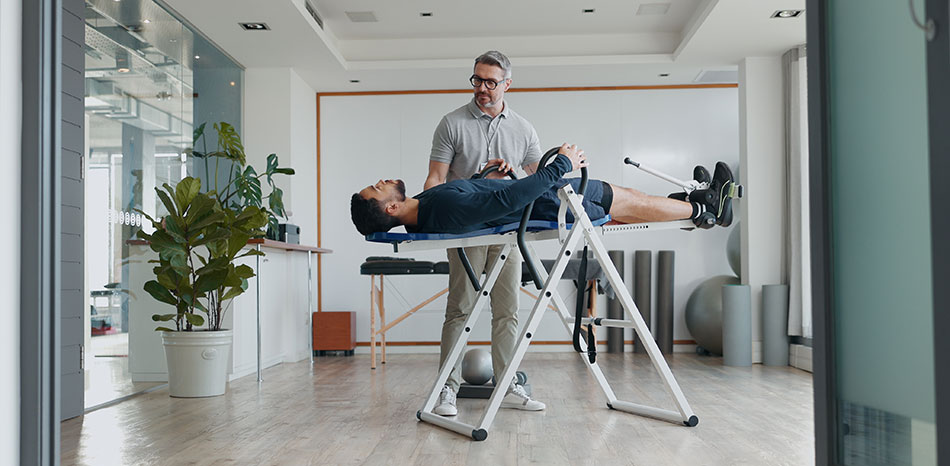
Many individuals living with dysautonomia, concussion, traumatic brain injury (TBI), stroke, or functional neurological disorder (FND) struggle with daily symptoms such as dizziness, brain fog, fatigue, and intolerance to upright activity. Standing, something most people take for granted, can become a major neurological challenge.
In chiropractic neurology, one of the most effective and underutilized tools for these conditions is the tilt table. It allows clinicians to use gravity as a graded therapeutic input, retraining the autonomic, vestibular, and sensorimotor systems in a safe and controlled environment. By manipulating angles of incline, the tilt table provides measurable influence on how the brain and body interact with gravity—helping to restore stability, coordination, and tolerance for daily activities.
Understanding the Challenge: When Gravity Becomes the Trigger
The human nervous system is built to operate efficiently within the pull of gravity. Every time a person stands, the brain must coordinate blood flow, muscle tone, and sensory integration to maintain equilibrium. When this system is disrupted by injury or dysfunction, the act of standing can trigger overwhelming symptoms.
In dysautonomia, for instance, the autonomic nervous system fails to properly regulate blood flow to the brain upon standing. This can lead to lightheadedness, tachycardia, or even fainting. After concussion or TBI, dysregulation of blood flow, vestibular dysfunction, and sensory hypersensitivity can compound these symptoms. In stroke and FND, disrupted sensory-motor integration and reduced cortical inhibition further impair stability and coordination.
The common thread is the brain’s altered relationship with gravity. The nervous system relies on continuous gravitational input to maintain orientation, posture, and vascular control. When it cannot process these signals properly, symptoms appear not only in the body but also in cognition, mood, and overall function.
Using the Tilt Table as a Neurological Tool
A tilt table provides a graded way to expose the nervous system to the gravitational stress of being upright. Unlike standing unaided, this exposure occurs in a supported and controlled environment, allowing clinicians to titrate angles and integrate therapeutic tasks safely.
From a chiropractic neurology standpoint, the tilt table serves three key therapeutic functions:
- Autonomic and Cardiovascular Retraining
Repeated, graded exposure to upright posture helps restore baroreceptor sensitivity and improve blood flow regulation. Tilt-based conditioning can enhance orthostatic tolerance and improve cerebral perfusion in patients with dysautonomia and postural orthostatic tachycardia syndrome (POTS). - Arousal and Sensory Integration
Transitioning from horizontal to vertical orientation changes venous return, intracranial pressure, and cerebral blood flow. These changes modulate the brainstem’s arousal centers, vestibular system, and sensory gating pathways—making tilt exposure a valuable stimulus for individuals recovering from TBI, stroke, or FND. - Controlled Multisystem Rehabilitation
The tilt table provides a unique opportunity to integrate visual, vestibular, cognitive, and motor exercises at individualized angles. This allows clinicians to challenge the brain without overwhelming it, supporting neuroplastic change through repetition and precision.
How Different Angles Influence the Brain
The body’s reaction to gravity is not linear. Even small changes in tilt can produce measurable effects on brain function and autonomic activity.
- Low Angles (10–30°):
Gentle head elevation subtly alters venous return and intracranial pressure. This position provides a low-arousal environment for individuals with severe sensitivity, allowing early introduction of vestibular, visual, or cognitive exercises without provoking symptoms. - Moderate Angles (30–60°):
Mid-range tilt angles begin to challenge cardiovascular regulation and vestibular function. This is often where clinicians implement combined gaze stability, visuovestibular, and cognitive tasks. The repeated exposure at this level strengthens cerebrovascular autoregulation and promotes adaptation to orthostatic stress. - High Angles (≥70°):
Near-upright positioning approximates standing and walking. It requires full integration of autonomic, sensory, and motor systems. At this level, patients work on complex multitasking and sensorimotor challenges under clinical supervision.
In each phase, the clinician adjusts the degree of tilt and the type of therapeutic input to match the patient’s current neurological capacity. This graded dosing of gravity helps prevent regression while promoting measurable, adaptive change.
Integrating Targeted Therapies on the Tilt Table
A tilt table becomes most effective when combined with evidence-based neurological rehabilitation strategies. These include:
Gaze Stability and Visuovestibular Rehabilitation
Gaze stability training focuses on retraining the vestibulo-ocular reflex (VOR), which keeps visual focus steady during head movement. Visuovestibular rehabilitation integrates eye, head, and body movements to improve balance, motion tolerance, and sensory integration.
Performing these tasks at specific tilt angles allows the brain to integrate visual and vestibular information under graded gravitational stress, reinforcing adaptation and reducing visual motion sensitivity. This combination strengthens pathways between the vestibular nuclei, cerebellum, and cortical centers responsible for spatial awareness and equilibrium.
Cognitive Exercises
Cognitive loading influences autonomic regulation and postural control. Tasks such as working memory challenges, attention-switching, and problem-solving exercises performed during moderate tilt can train the brain to manage cognitive and physiological demands simultaneously.
This dual-task training approach improves attention and postural stability, helping patients regain the ability to perform complex activities of daily life—such as standing in a grocery line, reading while walking, or maintaining balance during conversations in motion-rich environments.
Sensorimotor Retraining
Sensorimotor exercises focus on re-establishing the connection between sensory input and motor output. On the tilt table, these may include guided weight-shifting, targeted limb activation, or proprioceptive feedback tasks.
For individuals recovering from stroke or TBI, early mobilization and controlled verticalization have been shown to improve muscle recruitment, arousal, and functional outcomes. In cases of FND, this approach helps normalize movement patterns through graded, expectation-based retraining, restoring trust between sensory perception and motor response.
Visceral and Myofascial Techniques
The fascial and visceral systems of the body are rich in sensory receptors that send continuous information to the brain regarding position and internal state. Restrictions in these systems can distort proprioceptive input and autonomic regulation.
Gentle visceral mobilization and myofascial release can enhance venous return, diaphragm mobility, and overall autonomic balance. When combined with tilt-based retraining, these techniques may improve tolerance for upright activity, reduce mechanical restriction, and enhance overall neurological performance.
- Read more on: Unlocking Relief: How Chiropractic Neurology and Myofascial Therapies Can Conquer Trigeminal Neuralgia
Clinical Applications Across Conditions
Dysautonomia and POTS
For individuals with dysautonomia, the tilt table serves both diagnostic and therapeutic purposes. Gradual head-up training improves orthostatic tolerance, reduces symptom severity, and promotes reconditioning of the autonomic nervous system. When paired with vestibular and cognitive exercises, it provides an integrated approach to retraining autonomic and central regulation.
Concussion and Mild Traumatic Brain Injury
After concussion, many patients experience light and sound sensitivity, dizziness, and intolerance to upright posture. Tilt-table rehabilitation allows for safe reintroduction to gravitational stress while addressing visual and vestibular components of recovery. This graded exposure supports restoration of cerebral autoregulation and visual-vestibular coordination.
Stroke and Motor Rehabilitation
Tilt-table mobilization can serve as an early intervention for stroke recovery. Robotic or assisted stepping on tilt tables enhances arousal, motor recruitment, and independence when integrated into comprehensive rehabilitation. Early verticalization also supports cardiovascular health, prevents deconditioning, and facilitates cortical reorganization.
Functional Neurological Disorder (FND)
FND involves altered brain network connectivity and a mismatch between intention and movement. Graded tilt-table therapy helps rebuild accurate sensorimotor expectations and re-establish agency over voluntary movement. When combined with visuovestibular and cognitive retraining, this approach helps patients regain confidence in their body’s ability to move and respond appropriately to gravitational forces.
The Power of Gravity as a Therapeutic Input
Gravity is a constant force that shapes every moment of human existence. When the brain cannot efficiently manage its effects, symptoms emerge across multiple systems—autonomic, vestibular, cognitive, and musculoskeletal. The tilt table offers a way to reintroduce gravity as a controlled stimulus, rather than an overwhelming one.
Through intentional use of angles, targeted neurological tasks, and integrative manual therapies, tilt-table rehabilitation teaches the brain how to adapt once again to the world around it. Small changes in position create meaningful changes in function. For individuals recovering from dysautonomia, concussion, TBI, stroke, or FND, this approach provides a pathway back to resilience—one angle at a time.
If you or someone you love is suffering from unexplained symptoms and you would like to learn how chiropractic neurology can help, contact the team at Georgia Chiropractic Neurology Center today. We look forward to hearing from you.
Written by Sophie Hose, DC, MS, DACNB, CCSP
Peer-Reviewed References
- Alsalheen, B. A., Mucha, A., Morris, L. O., Whitney, S. L., Furman, J. M., & Sparto, P. J. (2020). Vestibular rehabilitation for dizziness and balance disorders after concussion. Journal of Neurologic Physical Therapy, 44(2), 87–93.
- Saengsuwan, J., Nef, T., Laubacher, M., & Riener, R. (2015). Restoration of motor function after stroke: robotic tilt-table therapy versus conventional therapy. NeuroRehabilitation, 36(2), 143–149.
- Stewart, J. M., Medow, M. S., & Rowe, P. C. (2018). Clinical disorders of orthostatic intolerance in the young: the orthostatic tachycardia syndromes. Pediatric Research, 84(3), 387–395.
- Perkes, I., Baguley, I. J., Nott, M. T., & Menon, D. K. (2011). A review of paroxysmal sympathetic hyperactivity after acquired brain injury. Annals of Neurology, 68(2), 126–135.
- Ajimsha, M. S., Al-Mudahka, N. R., & Al-Madzhar, J. A. (2015). Effectiveness of myofascial release: systematic review of randomized controlled trials. Journal of Bodywork and Movement Therapies, 19(1), 102–112.