

Athletes at every level are constantly searching for an edge. Professional competitors invest heavily in recovery technologies, strength programs, sleep optimization, nutrition, and data analytics. Recreational athletes are doing the same on a smaller scale, trying to run faster, lift more efficiently, improve endurance, or simply stay active without setbacks.
But there is one critical factor that is often overlooked: the nervous system.
Muscles do not move themselves. Balance does not happen automatically. Coordination, reaction time, body awareness, timing, rhythm, and movement efficiency are all controlled by the brain and nervous system. When communication between the brain and body becomes inefficient, performance can decline long before pain or injury appears.
This is where chiropractic neurology enters the conversation.
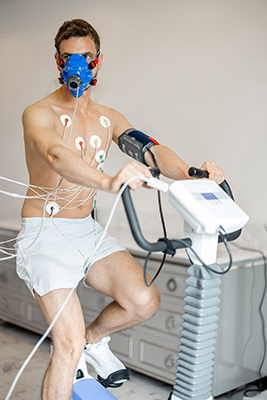 While many people associate chiropractic care exclusively with pain relief or injury rehabilitation, chiropractic neurology focuses on optimizing the function of the nervous system itself. For athletes, that means looking beyond symptom management and addressing the neurological foundations of movement, coordination, recovery, and performance.
In today’s sports environment, the difference between success and injury is often measured in milliseconds, movement precision, and fatigue resistance. Chiropractic neurology aims to improve how the brain processes sensory information and how efficiently the body responds to that information.
For both professional and recreational athletes, that can influence not only recovery from injury, but also performance enhancement and long-term injury prevention.
Every athlete shares a similar goal.
Some want to improve reaction time on the tennis court. Others want better rotational control in golf, more stability under heavy loads, faster sprint acceleration, improved balance during cutting movements, or greater endurance late in competition.
Many recreational athletes simply want to continue exercising consistently without recurring setbacks.
The challenge is that performance is not determined solely by strength or conditioning. Two athletes can possess similar physical abilities while producing very different outcomes. One moves efficiently under pressure while the other becomes unstable, delayed, or fatigued.
The difference often lies in neurological efficiency.
The nervous system constantly processes incoming sensory information from the eyes, inner ear, muscles, joints, and skin. The brain then integrates this information to create movement output. If that sensory input is inaccurate or poorly integrated, movement quality decreases.
Athletes may compensate without realizing it.
Reaction times are slow. Balance becomes less stable. Joint positioning becomes less precise. Movement patterns become less efficient. Fatigue accumulates faster. Eventually, injury risk increases.
In many cases, the body is not failing because it lacks strength. It is struggling because the nervous system is no longer processing and coordinating movement efficiently.
Performance and Injury Are Neurologically Connected
Sports injuries are often viewed as isolated orthopedic problems. However, many injuries occur because of breakdowns in motor control, timing, balance, coordination, or proprioception.
Proprioception refers to the body’s awareness of position and movement in space. It is what allows an athlete to cut, pivot, land, sprint, throw, or change direction with precision.
When proprioceptive processing declines, even slightly, movement accuracy decreases.
- A runner may lose efficiency during foot strike.
- A baseball player may demonstrate altered rotational sequencing.
- A soccer player may have delayed stabilization during cutting movements.
- A golfer may lose consistency through the swing.
These subtle changes may not initially create pain, but they can increase mechanical stress over time.
This is why chiropractic neurology focuses heavily on sensory integration and brain-body communication. Rather than asking only where pain exists, chiropractic neurologists also evaluate how the nervous system processes movement, balance, visual input, vestibular information, coordination, and motor control.
For athletes, this perspective matters.
Improving neurological efficiency may enhance performance while simultaneously reducing the movement errors that contribute to overuse injuries and biomechanical stress.
How Chiropractic Neurology Approaches Athletic Performance
A chiropractic neurologist acts as a guide who helps athletes better understand how the nervous system influences performance.
Instead of viewing the body as a collection of isolated muscles and joints, chiropractic neurology evaluates the integration of multiple systems:
- Visual processing
- Vestibular function
- Proprioception
- Coordination
- Balance
- Motor planning
- Spatial awareness
- Reaction timing
- Sensory integration
These systems continuously communicate with the brain during athletic activity.
For example, balance is not simply a strength issue. It requires accurate integration between the visual system, vestibular system, cerebellum, and proprioceptive input from muscles and joints.
Reaction time is not simply reflexive speed. It depends on how efficiently the brain processes incoming sensory information and organizes motor output.
Movement precision depends on accurate cortical and cerebellar communication.
When these systems are functioning optimally, athletes often move more efficiently, recover faster between movements, and maintain greater stability under fatigue.
Research has increasingly explored the relationship between neurological function and athletic performance outcomes.
Emerging research continues to support the connection between nervous system function and athletic performance. A randomized controlled trial involving Special Operations Forces personnel found immediate improvements in whole-body reaction and response times following chiropractic intervention, suggesting that optimizing neurological input may influence motor performance and coordination. Additional studies have explored the relationship between spinal dysfunction and cognitive processing, indicating that altered sensory input may affect how efficiently the brain processes and responds to movement-related information.
A 2019 systematic review examining spinal manipulation and performance-related outcomes further reported measurable changes in areas such as proprioception, range of motion, and certain aspects of motor performance. While the authors emphasized the need for additional high-quality research, the growing body of evidence highlights the important role the nervous system may play in athletic function, movement efficiency, and performance potential.
At the same time, chiropractic neurology should not be viewed as a shortcut or replacement for strength training, conditioning, coaching, nutrition, or recovery strategies. Instead, it is best understood as one component of a comprehensive performance approach focused on improving the efficiency and adaptability of the nervous system.
Building Better Neurological Performance
Athletic performance depends on consistent, efficient neurological processing.
That means the brain must accurately receive information, interpret it quickly, and produce coordinated movement responses.
Chiropractic neurology often incorporates targeted strategies designed to improve these processes.
These approaches may include:
- Balance and coordination training
- Eye movement and visual tracking exercises
- Vestibular stimulation
- Proprioceptive rehabilitation
- Neurocognitive movement drills
- Sensory integration strategies
- Motor control retraining
- Breathing and autonomic regulation techniques
- Movement pattern optimization
The goal is not simply stronger muscles.
The goal is more efficient communication between the brain and body.
For example, an athlete with poor balance may not necessarily lack lower-body strength. The issue may involve delayed vestibular processing or reduced proprioceptive awareness.
Similarly, a rotational athlete with inconsistent movement sequencing may demonstrate altered sensory-motor integration rather than isolated muscular weakness.
By improving neurological efficiency, athletes may experience:
- Faster reaction times
- Improved coordination
- Better balance and stability
- Enhanced movement precision
- Greater body awareness
- Reduced movement compensation
- More efficient motor patterns
- Improved recovery capacity
- Better resilience under fatigue
Importantly, these changes may also help reduce injury risk.
Why Better Performance Can Help Prevent Injuries
Injury prevention is often discussed separately from performance enhancement, but the two are closely connected.
Efficient athletes typically move with greater control, better timing, and improved biomechanical consistency.
Poor movement quality frequently increases tissue stress.
When fatigue accumulates and neurological efficiency decreases, athletes may begin compensating in ways that overload joints, muscles, and connective tissue.
This is particularly important in sports requiring rapid deceleration, rotational power, reactive balance, and multidirectional movement.
An athlete with delayed stabilization during landing mechanics may place greater stress on the knee.
An athlete with reduced proprioceptive awareness may demonstrate inefficient joint positioning.
An athlete with visual-vestibular mismatch may react more slowly during high-speed competition.
These are not purely orthopedic problems.
They are neurological performance problems that can eventually become orthopedic injuries.
This is one reason why many modern sports performance programs increasingly integrate neurological training principles into conditioning and rehabilitation.
The brain is ultimately responsible for controlling movement quality.
If movement quality improves, injury risk may decrease.
Research examining spinal manipulation and athletic performance has proposed several theoretical mechanisms related to motor coordination, cortical activation, and reaction timing. (chiromt.biomedcentral.com)
Studies exploring cortical drive and neuromuscular performance have suggested that neurological interventions may influence muscle activation patterns and motor output. (link.springer.com)
Although more large-scale research is needed, the emerging literature continues to support the idea that neurological efficiency plays a meaningful role in athletic function.
Performance Beyond Recovery
For years, many athletes viewed chiropractic care primarily as a tool for pain management or injury recovery.
Today, the conversation is evolving.
Athletes increasingly recognize that performance depends on much more than isolated strength or mobility. The nervous system influences every aspect of athletic function, from reaction time and coordination to movement precision and recovery.
Professional athletes often operate within extremely small margins where even subtle improvements in movement efficiency may influence outcomes.
Recreational athletes benefit as well.
Improved balance, coordination, and body awareness can help runners maintain consistency, help golfers improve swing mechanics, help weightlifters stabilize under load, and help active adults continue exercising with greater confidence.
Most importantly, chiropractic neurology emphasizes proactive performance optimization rather than waiting for injury to occur.
Instead of asking only how to recover after breakdown, chiropractic neurology asks how to improve the systems that influence movement quality before problems develop.
That shift in perspective matters.
Athletic performance is not only about building stronger muscles.
It is about building a more adaptable, efficient, and resilient nervous system.
When the brain processes information more effectively, movement becomes more precise.
When movement becomes more precise, performance improves.
And when performance improves through better neurological control and movement efficiency, injury risk may decrease as well.
For athletes trying to stay healthy, competitive, and consistent over the long term, that may be one of the most important advantages of all.
Written by Sophie Hose, DC, MS, DACNB, CCSP
Peer-Reviewed References
- Corso M, Mior S, Batley S, et al. The effects of spinal manipulation on performance-related outcomes in healthy asymptomatic adult population: a systematic review of best evidence. Chiropractic & Manual Therapies. 2019;27:25.
- DeVocht JW, Vining R, Smith DL, et al. Effect of chiropractic manipulative therapy on reaction time in special operations forces military personnel: a randomized controlled trial. Trials. 2019;20(1):5.
- Christiansen TL, Niazi IK, Holt K, et al. The effects of a single session of spinal manipulation on strength and cortical drive in athletes. European Journal of Applied Physiology. 2018;118:737-749.
- Lersa LB, Stinear CM, Lersa RA. The relationship between spinal dysfunction and reaction time measures. Journal of Manipulative and Physiological Therapeutics. 2005;28(7):502-507.
- DeVocht JW, Smith DL, Long CR, et al. The effect of chiropractic treatment on the reaction and response times of special operation forces military personnel: study protocol for a randomized controlled trial. Trials. 2016;17:457.