
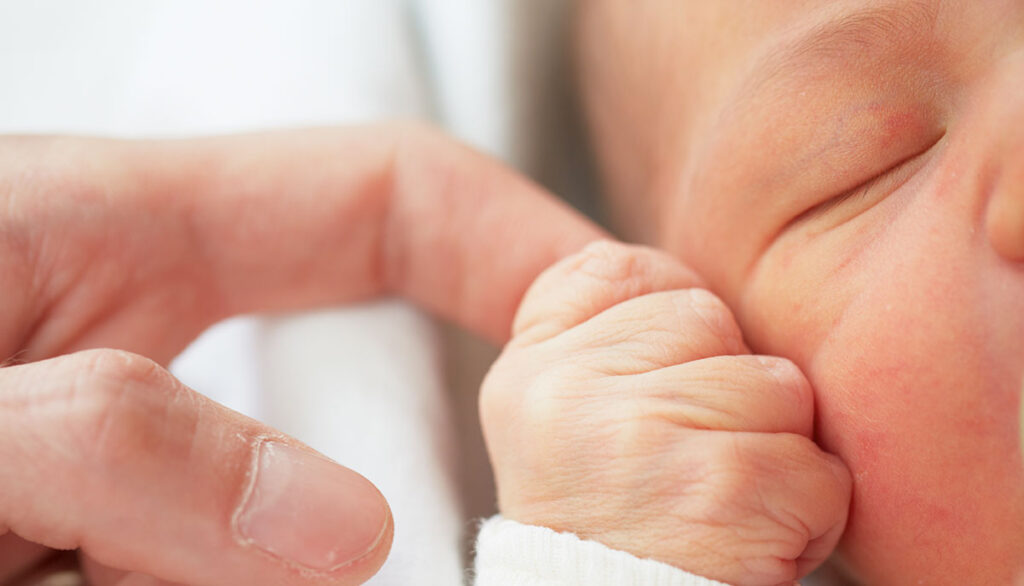
Most parents have seen a newborn grasp a finger tightly or turn their head toward a touch on their cheek.
These responses often seem adorable and instinctive.
What many parents do not realize is that these automatic movements are actually primitive reflexes—some of the earliest signs of nervous system function.
Primitive reflexes play a critical role in early development.
They help babies survive, interact with their environment, and build the neurological foundation for future movement and learning.
However, these reflexes are meant to appear at specific times and then gradually disappear as higher levels of the brain mature.
When primitive reflexes are absent when they should be present, or remain active longer than expected, they may interfere with normal neurological development.
Understanding primitive reflexes helps explain why early childhood movement is so important and why some developmental challenges may have deeper neurological roots.
- Learn more about: Why Developmental Milestones Matter: Understanding the Building Blocks of Your Child’s Brain Development
A Child Learning How to Navigate the World
Every newborn enters the world with a set of automatic survival programs.
These reflexes require no conscious thought.
They are controlled largely by lower brain centers and help the infant interact with the environment before voluntary movement develops.
Primitive reflexes help infants:
- Feed
- Protect themselves
- Develop posture
- Build muscle tone
- Learn movement patterns
- Stimulate sensory systems
- Support neurological maturation
These reflexes are not mistakes or abnormalities.
They are essential developmental tools.
The problem occurs when they are absent, delayed, or fail to integrate appropriately.
Reflexes That Stay Too Long Can Interfere with Development
Primitive reflexes are designed to be temporary.
As the brain develops, higher centers gradually take control and inhibit these automatic responses.
This process is called reflex integration.
When integration occurs appropriately, children gain greater voluntary control over movement and behavior.
When reflexes remain active beyond their expected developmental window, they can interfere with normal function.
Instead of supporting development, they may begin competing with it.
This can affect:
- Balance
- Coordination
- Posture
- Attention
- Emotional regulation
- Reading
- Writing
- Motor planning
- Sensory processing
The longer a retained reflex remains active, the more opportunities it has to influence movement and behavior patterns.
Understanding Common Primitive Reflexes
Moro Reflex
Often called the “startle reflex,” the Moro reflex helps infants respond to sudden changes in their environment.
It typically emerges at birth and integrates within the first few months of life.
When retained, it has been associated with:
- Heightened stress responses
- Anxiety
- Sensory sensitivity
- Emotional reactivity
- Difficulty adapting to change
Asymmetrical Tonic Neck Reflex (ATNR)
When an infant turns their head, the arm and leg on that side extend while the opposite side flexes.
This reflex helps prepare the infant for rolling and later movement.
When retained, it may contribute to:
- Difficulty crossing the midline
- Reading challenges
- Handwriting problems
- Poor bilateral coordination
- Sports performance difficulties
Symmetrical Tonic Neck Reflex (STNR)
The STNR helps transition children from lying to crawling positions.
If retained, it may be associated with:
- Poor posture
- Difficulty sitting still
- Coordination challenges
- Delayed crawling patterns
Tonic Labyrinthine Reflex (TLR)
This reflex influences muscle tone and postural development.
Retention may contribute to:
- Balance difficulties
- Poor coordination
- Motion sensitivity
- Delayed motor development
Palmar Reflex
This reflex causes infants to grasp objects placed in their hands.
When retained, it may affect:
- Fine motor skills
- Pencil grip
- Handwriting
- Dexterity
A Chiropractic Neurology Perspective
From a chiropractic neurology perspective, primitive reflexes provide valuable information about nervous system development.
 Because these reflexes originate in lower brain centers and should be inhibited by higher cortical development, retained reflexes may indicate incomplete neurological maturation.
Assessment of primitive reflexes may be considered as part of a broader neurological examination evaluating:
- Balance
- Coordination
- Eye movements
- Motor control
- Sensory integration
- Cognitive function
- Developmental history
Primitive reflexes do not diagnose specific disorders.
However, they may provide clues about how efficiently the nervous system is developing and organizing itself.
- Meet our Doctors here.
Conditions Associated with Retained Primitive Reflexes
Research has identified associations between retained primitive reflexes and various developmental challenges.
These may include:
- ADHD
- Learning disabilities
- Dyslexia
- Developmental coordination disorder
- Sensory processing difficulties
- Autism spectrum disorders
- Postural dysfunction
- Motor delays
It is important to emphasize that retained reflexes do not necessarily cause these conditions.
Rather, they may represent one contributing factor or indicator of altered neurological development.
Supporting Reflex Integration
The nervous system remains adaptable throughout childhood.
Targeted developmental activities may help promote neurological organization and integration.
Depending on the child’s needs, interventions may include:
- Developmental movement exercises
- Cross-body coordination activities
- Balance training
- Vestibular stimulation
- Sensory integration activities
- Eye movement exercises
- Primitive reflex integration programs
The goal is not simply eliminating reflexes.
The goal is helping the brain develop stronger voluntary control over movement and sensory processing.
Building a Better Neurological Foundation
Primitive reflexes are among the earliest building blocks of development.
They help infants survive, explore, and interact with the world.
But they are meant to be stepping stones, not permanent features.
When primitive reflexes emerge, integrate, and give way to more advanced motor control, children develop the neurological foundation needed for learning, movement, attention, and emotional regulation.
Understanding primitive reflexes helps parents appreciate that development is about much more than reaching milestones.
It is about building a nervous system capable of supporting a child’s full potential.
Early recognition of developmental concerns allows families to seek appropriate evaluation and support, helping children develop the skills they need to thrive both in childhood and beyond.
If you or someone you love is suffering from developmental delays and you would like to learn how chiropractic neurology can help, contact the team at Georgia Chiropractic Neurology Center today. We look forward to hearing from you.
Written by Sophie Hose, DC, MS, DACNB, CCSP
Peer-Reviewed References
- Sally Goddard Blythe. Assessing Neuromotor Readiness for Learning.
- Peter H. Wolff. The development of behavioral states and primitive reflexes in infancy.
- Melanie McPhillips et al. Relationship between retained primitive reflexes and reading difficulties.
- A. J. Capute. Early developmental assessment and neurological maturation.
- American Academy of Pediatrics. Developmental surveillance and screening recommendations.
- Centers for Disease Control and Prevention. Developmental milestones and early childhood development guidelines.